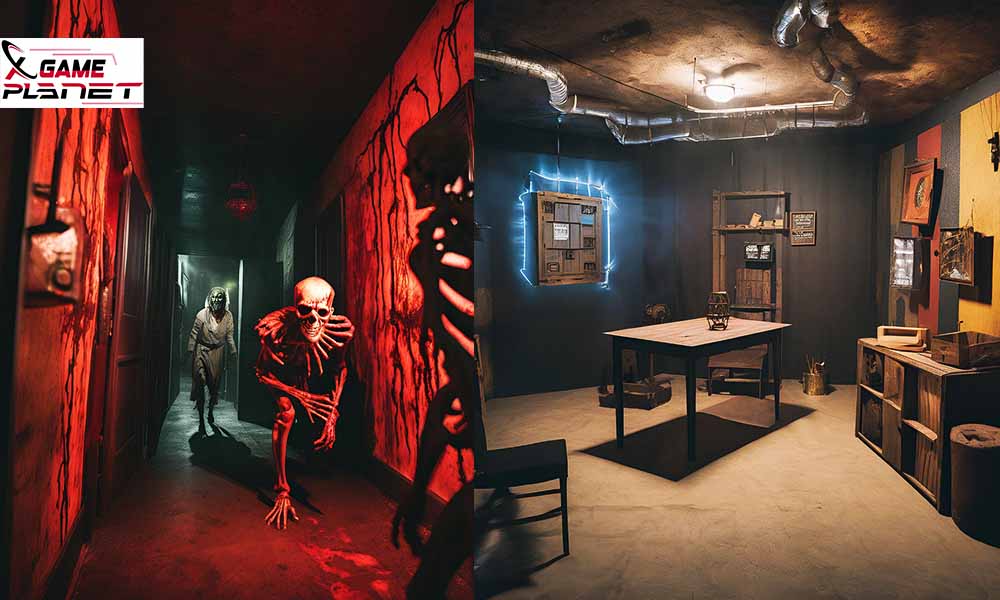
Escape room

Launch and building an escape room
- In the first stage, we identify your needs and, based on that and the idea you have in mind, start designing the scenario and story of your escape room.
- In the second stage, a map of your environment will be drawn and delivered to you in the form of a file.
- In the third stage, the executive team will go to your location to carry out the necessary construction work (if necessary) and also the decoration.
- In the fourth stage, our team will place the puzzles and test them.
- In the fifth stage, you will set up the whole thing with your actor to ensure the correct execution of the scenario steps.
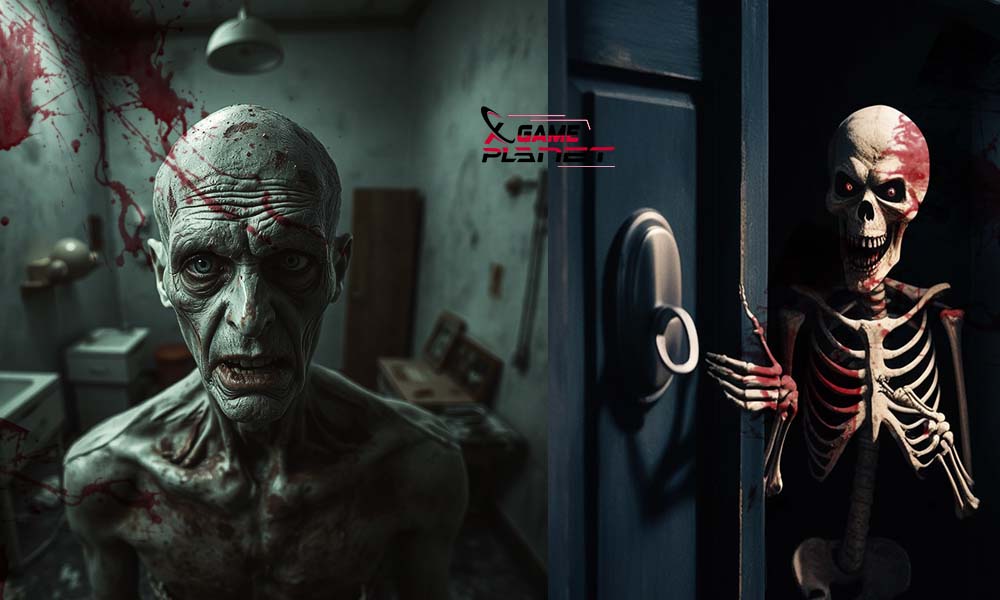
What is an Escape Room?
An escape room is a group adventure game in which participants are placed in a room or a series of rooms and must solve riddles and puzzles to find the key or password to exit the rooms. The game usually has a specific theme or story that companies must solve puzzles with, and at the same time, depending on the scenario and story, they will be excited and scared.
An escape room is an exciting, educational and group experience that can create lasting memories. These games allow you to solve puzzles and participate in a shared adventure in a fictional environment. An escape room experience is not only fun, but also develops your social and intellectual skills.
History of Escape Rooms
Escape rooms first appeared in the 2000s. The game first appeared in Japan and then quickly gained popularity in other countries. The first escape rooms were influenced by adventure video games, in which players had to escape a virtual environment by solving puzzles and riddles. Over time, this concept evolved into a real, in-person experience.
Why Escape Rooms?
Escape rooms are not only an interesting pastime, but also strengthen logical thinking, teamwork, and problem-solving skills. These games are an opportunity to strengthen social relationships, increase creativity, and provide experiences full of excitement and adventure. Escape rooms The main attraction of escape rooms is the combination of intellectual challenges and hands-on experience in an environmental setting. Also, the different themes and fascinating stories of these games make each escape room experience unique. During the game, players enter another world and become part of an exciting story.
We are proud to help you launch 0 to 100 escape rooms by providing a variety of services in the field of escape rooms.

Why should you entrust your escape room to us?
- Consulting and needs assessment
- Design of exclusive scenarios
- Decoration design
- Types of electronic puzzles
- Exciting accessories and masks
- Complete game management with software
Types of escape rooms
Escape rooms have models, including:
- Story-oriented models:
Games that focus more on the stories and topics they have. - Puzzle-oriented models:
Games that are dedicated to intellectual challenges and specific puzzles. - Hybrid models:
A combination of story and puzzles that provide more immersive experiences.
Escape room scenarios
Currently, there are new and interesting scenarios for escape rooms that have gained great popularity due to their innovation and high. Here are some examples of the latest scenarios:
- Futuristic and Virtual Worlds: Scenarios in which you are transported to virtual worlds or distant futures. These scenarios usually involve advanced technologies, robots, and digital environments.
- Historical Decoding: Rooms in which you have to solve historical puzzles and discover the secrets of different eras. These scenarios usually involve historical stories and ancient objects.
- Criminal and Investigation: Escape rooms in which you have to solve criminal puzzles and discover crimes as a detective. These scenarios usually involve complex stories and mysterious characters.
- Adventure in Nature: Scenarios in which you have to solve puzzles in natural environments and forests or vast deserts. These scenarios are usually exciting due to their special designs and environmental challenges.
- Space Travel: Rooms where you have to solve puzzles in space and various space environments. These scenarios usually involve space equipment and science fiction.
- Horror: You and your group enter someone’s house on a stormy night. Upon entering, the front door automatically locks and you realize that you have to escape from this house, solving various puzzles.
Escape Room Puzzles
Electronic puzzles in escape rooms are one of the most interesting parts of these games, as they allow for the design of complex and creative interactions. Here are some types of electronic puzzles that can be used in escape rooms:
- Keypad crypto puzzles: Players must unlock a door or chest by entering the correct code through an electronic keypad. This code may be obtained by solving other puzzles or discovering clues.
- Motion sensor puzzles: These types of puzzles work using motion sensors (such as infrared or laser). Players must move in a specific way (for example, pass through laser beams without hitting them) to solve the puzzle.
- Touch detection puzzles: These puzzles work using touch screens or touch-sensitive buttons. Players may need to draw a specific pattern on the screen or press several buttons in the correct order to solve the puzzle.
- RFID puzzles: Puzzles that use RFID technology require placing a specific object or card (equipped with an RFID tag) on a specific spot. Players must find the correct object and place it in the correct spot to solve the puzzle.
- Light and sound puzzles: These types of puzzles use light and sound to guide players. For example, players must activate a series of lights or sounds in the correct order or listen to environmental sounds to find clues.
- Magnetic puzzles: These types of puzzles use magnetic sensors to detect metal or magnetic objects. Players must bring the appropriate metal or magnetic object close to a specific spot to solve the puzzle.
- Timed puzzles: In these puzzles, players must perform a specific activity within a limited or specified time. For example, pressing several buttons within a certain time or completing a task before the time limit expires.
- Voice Recognition Puzzles: These types of puzzles have built-in microphones that respond to the player’s voice. Players must say a specific word or make a sound with a specific tone to activate the system and solve the puzzle.
Conclusion
Escape rooms are more than just a game—they’re an adventure that challenges your mind and strengthens your connections with others. Whether you’re looking for a fun night out, a team-building exercise, or a way to sharpen your problem-solving skills, escape rooms offer something for everyone. So gather your team, embrace the challenge, and see if you have what it takes to escape before time runs out!